Eastern Mediterranean Region
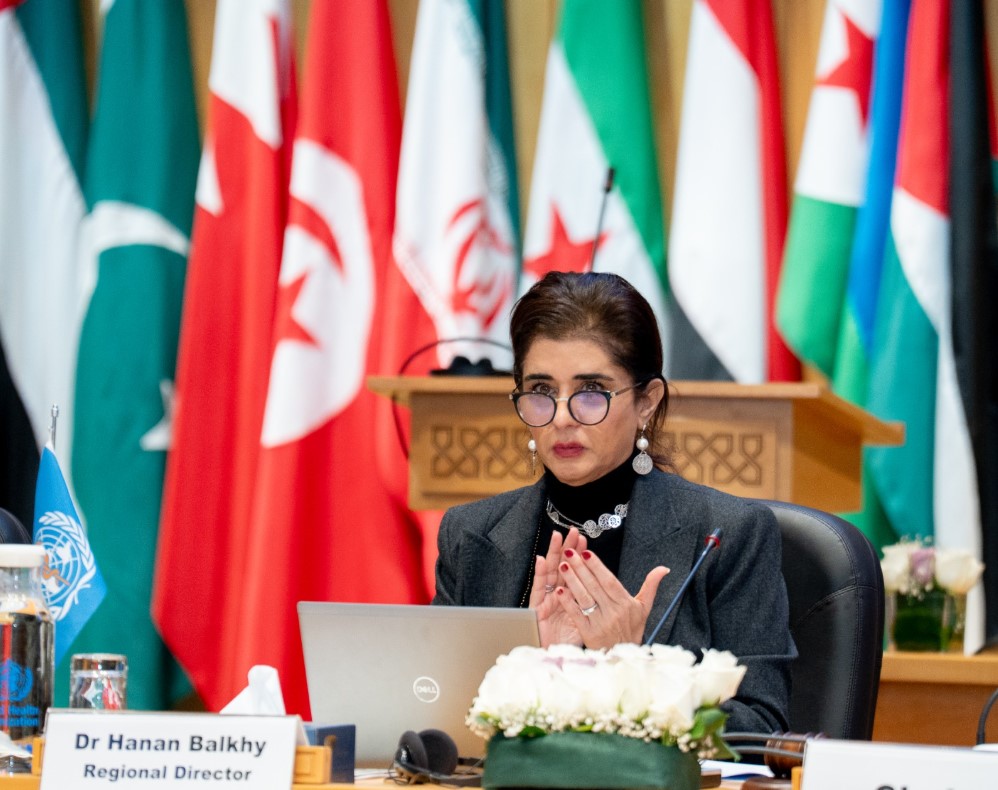 Dr Hanan Balkhy
WHO Regional Director for the Eastern Mediterranean
The 2024–2025 biennium has tested health systems across the Eastern Mediterranean Region in unprecedented ways. Conflict, displacement, climate pressures and economic constraints have created a highly complex operating environment—yet countries continue to deliver and advance public health outcomes.
WHO has supported countries to maintain essential health services while responding to multiple overlapping emergencies, even in the most challenging settings. These efforts have helped control outbreaks, sustain services, and coordinate partners. Investments in surveillance, health workforce capacity, and emergency coordination have strengthened preparedness. New AI-powered tools have reduced emergency information turnaround times from weeks to minutes.
WHO stepped up support to national immunization programmes to reverse declining coverage and address widening equity gaps. Resurgent polio was contained in Gaza with a campaign that reached 600 000 children, while wild poliovirus transmission remains largely confined to parts of Afghanistan and Pakistan.
Countries have advanced disease elimination and control efforts—including tetanus, trachoma, malaria and hepatitis B—while maintaining strong performance in tuberculosis control. At the same time, digital transformation is accelerating progress: Iraq’s DHIS2 platform is enabling real-time surveillance and supply chain management, and strengthened civil registration systems in Morocco are improving the completeness and use of health data.
Action on noncommunicable diseases and nutrition continues, with policies to reduce risk factors like sugar taxes and the elimination of industrial trans fats. WHO supported treatment for over 300 000 children with severe acute malnutrition.
Countries are strengthening primary health care through better governance, financing, and local production of medical products. Stronger partnerships have improved alignment with national priorities.
Despite a difficult global funding environment, the Region mobilized US$1.6 billion and expanded its donor base to sustain critical programmes.
At the same time, challenges are becoming more complex and interconnected. Emergencies are increasingly persistent, with shocks capable of rapidly disrupting systems and reversing gains. Sustained investment in preparedness and resilience will be essential to protect progress and advance health for all.
PROGRESS ON THE TRIPLE BILLION TARGETS
Regional Aggregation
These charts illustrate the contributions of various tracer indicators driving progress toward the Triple Billion targets for universal health coverage, health emergencies and healthier populations. Each stacked bar shows the relative contribution of these indicators over time, highlighting both gains and areas where progress has reversed. The overlaid lines indicate the net impact of outcome indicators associated with each target, providing a broader view of how health impact is evolving.
WHO CONTRIBUTION TOWARDS HEALTH OUTCOMES
Regional Aggregation Of The Output Prioritization
This table provides a regional overview of the financing and implementation of prioritized outputs. It presents planned costs, available funds and utilization, alongside the number of offices (countries, territories and areas) that have identified each output as high or medium priority.
OUTPUT SCORECARDS
WHO’s Output Scorecard Measures Its Performance For Accountability
These scorecards provide an overview of progress in the delivery of outputs across the Region. Performance is assessed across six dimensions, each with specific criteria for technical and enabling outputs. Select an outcome to explore the related scorecards.
HIGHLIGHTED RESULTS
Explore WHO’s Contribution To Health Outcomes Across the Region
- Universal health coverage
- Health emergencies protection
- Healthier populations
- Effective and efficient WHO
-
 EM-1_Strategic Resilience: Managing the Unseen Burden of Communicable Diseases in Conflict and Crisis
In a region fractured by conflict and systemic disruption, the World Health Organization (WHO) has served as the essential backbone for addressing the burden of communicable diseases (CDs) through strengthening health systems and managing outbreaks. Protracted crises in Sudan, Yemen, the Syrian Arab Republic, Afghanistan, Libya and the occupied Palestinian territory created ideal conditions for the spread of epidemics, including cholera, Crimean–Congo haemorrhagic fever (CCHF), meningitis, mpox, typhoid and hepatitis A. WHO EMRO’s rapid, context-tailored support has been critical for outbreak response capacity and addressing existing communicable diseases, while safeguarding the most vulnerable.Key achievements included strengthening infection prevention and control (IPC) in emergency settings. By 2024, the Region surpassed the global average, reaching IPC Level 3 (“developed capacity”) through the integration of IPC guidance into emergency frameworks and the deployment of technical experts to high-risk zones. A cornerstone of WHO EMRO’s support was the digital transformation of surveillance and laboratory architecture. The rollout of the District Health Information System (DHIS2) in Iraq and laboratory information management systems (LIMS) across multiple territories enabled real-time, case-based surveillance and reliable reporting. These platforms, supported by partnerships including WHO collaborating centres, addressed long-standing gaps in data fragmentation and pervasive underdiagnosis.In Jordan, the 2026–2030 National Laboratories Strategic Plan established new benchmarks for governance, while WHONET training empowered 21 countries to strengthen antimicrobial resistance (AMR) surveillance and contribute to the Global Antimicrobial Resistance and Use Surveillance System (GLASS). Notably, WHO EMRO supported Pakistan’s AMR programme to develop bacterial and fungal priority pathogen lists. Egypt and Pakistan implemented sequelae surveillance protocols to capture hepatitis-related mortality, and Egypt developed a sustainability plan to consolidate hepatitis elimination efforts.Technical resilience was further demonstrated through the protection of essential services. Despite ongoing instability, WHO continued to provide technical support to the Syrian Arab Republic, Sudan and Egypt to scale up DR-TB management. TB programme review missions were supported in Afghanistan, Djibouti and Pakistan. In addition, cross-border collaboration on TB was addressed through a policy brief, and pooled procurement support for CD diagnosis and treatment extended to Global Fund-supported countries. Evidence-based adaptations were central to this strategy: regional monitoring of molecular markers informed Sudan’s 2026 decision to switch its malaria diagnostic protocols, while subnational tailoring in Somalia and Yemen optimized malaria interventions. In Egypt, reliable mapping confirmed elimination-level thresholds for trachoma.Collectively, these achievements improved CD diagnostics, strengthened case detection and enhanced the quality of epidemiological data across the Region. Enhanced digital platforms, stronger external quality assurance and expanded laboratory governance enabled countries to better estimate CD burden, allocate resources effectively and monitor progress towards elimination targets. This transformation proves that in fragile settings, interoperable digital systems, robust data governance and evidence-based interventions are fundamental to uncovering hidden disease burdens, effectively responding to outbreaks and ensuring equitable care.
EM-1_Strategic Resilience: Managing the Unseen Burden of Communicable Diseases in Conflict and Crisis
In a region fractured by conflict and systemic disruption, the World Health Organization (WHO) has served as the essential backbone for addressing the burden of communicable diseases (CDs) through strengthening health systems and managing outbreaks. Protracted crises in Sudan, Yemen, the Syrian Arab Republic, Afghanistan, Libya and the occupied Palestinian territory created ideal conditions for the spread of epidemics, including cholera, Crimean–Congo haemorrhagic fever (CCHF), meningitis, mpox, typhoid and hepatitis A. WHO EMRO’s rapid, context-tailored support has been critical for outbreak response capacity and addressing existing communicable diseases, while safeguarding the most vulnerable.Key achievements included strengthening infection prevention and control (IPC) in emergency settings. By 2024, the Region surpassed the global average, reaching IPC Level 3 (“developed capacity”) through the integration of IPC guidance into emergency frameworks and the deployment of technical experts to high-risk zones. A cornerstone of WHO EMRO’s support was the digital transformation of surveillance and laboratory architecture. The rollout of the District Health Information System (DHIS2) in Iraq and laboratory information management systems (LIMS) across multiple territories enabled real-time, case-based surveillance and reliable reporting. These platforms, supported by partnerships including WHO collaborating centres, addressed long-standing gaps in data fragmentation and pervasive underdiagnosis.In Jordan, the 2026–2030 National Laboratories Strategic Plan established new benchmarks for governance, while WHONET training empowered 21 countries to strengthen antimicrobial resistance (AMR) surveillance and contribute to the Global Antimicrobial Resistance and Use Surveillance System (GLASS). Notably, WHO EMRO supported Pakistan’s AMR programme to develop bacterial and fungal priority pathogen lists. Egypt and Pakistan implemented sequelae surveillance protocols to capture hepatitis-related mortality, and Egypt developed a sustainability plan to consolidate hepatitis elimination efforts.Technical resilience was further demonstrated through the protection of essential services. Despite ongoing instability, WHO continued to provide technical support to the Syrian Arab Republic, Sudan and Egypt to scale up DR-TB management. TB programme review missions were supported in Afghanistan, Djibouti and Pakistan. In addition, cross-border collaboration on TB was addressed through a policy brief, and pooled procurement support for CD diagnosis and treatment extended to Global Fund-supported countries. Evidence-based adaptations were central to this strategy: regional monitoring of molecular markers informed Sudan’s 2026 decision to switch its malaria diagnostic protocols, while subnational tailoring in Somalia and Yemen optimized malaria interventions. In Egypt, reliable mapping confirmed elimination-level thresholds for trachoma.Collectively, these achievements improved CD diagnostics, strengthened case detection and enhanced the quality of epidemiological data across the Region. Enhanced digital platforms, stronger external quality assurance and expanded laboratory governance enabled countries to better estimate CD burden, allocate resources effectively and monitor progress towards elimination targets. This transformation proves that in fragile settings, interoperable digital systems, robust data governance and evidence-based interventions are fundamental to uncovering hidden disease burdens, effectively responding to outbreaks and ensuring equitable care. -
 EM-1_Strengthening Access to Medical Products in the Eastern Mediterranean Region
The World Health Organization Regional Office for the Eastern Mediterranean (EMRO) continues to play a critical role in expanding access to safe, effective and affordable medical products across the Region. Through technical leadership, normative guidance and strategic convening, the WHO Secretariat supported Member States in addressing longstanding barriers, including weak regulatory systems, supply chain inefficiencies, high costs of medicines and the impacts of protracted humanitarian crises. These efforts have contributed to improved availability, quality and affordability of essential health technologies.A major milestone was the endorsement of the Regional Director’s flagship initiative on expanding equitable access to medical products by the WHO Regional Committee for the Eastern Mediterranean (RC71) in October 2024. The initiative provides a comprehensive regional framework to strengthen regulatory systems, build resilient supply chains and promote local and regional production. Early implementation is helping to reduce dependence on external markets, mitigate supply disruptions and improve access to quality-assured medicines and vaccines during both routine care and emergencies.Strengthening national regulatory authorities (NRAs) remained a core focus. Afghanistan, Jordan, Morocco, Oman and Tunisia conducted regulatory self-benchmarking and advanced institutional development plans aligned with WHO global standards. Pre-benchmarking and progress assessments were completed in four high medicine-producing countries—Jordan, Morocco, Pakistan and Tunisia—supporting measurable progress towards regulatory maturity. Tunisia also received targeted technical assistance to support the establishment of a new regulatory agency and strengthen governance arrangements.Capacity-building efforts further enhanced regulatory oversight. Training on pharmacovigilance and vaccine safety in countries including Jordan and Iraq strengthened post-market surveillance systems. As a result, membership in the WHO Programme for International Drug Monitoring expanded to 17 full Member States, reinforcing regional capacity to detect safety signals and reduce the circulation of substandard and falsified medical products.WHO also advanced regulatory cooperation and market efficiency. The launch of the North African Medicines Regulatory Harmonization initiative in 2025 marked a significant step towards regulatory convergence. Expanded use of the WHO Collaborative Registration Procedure enabled countries such as Jordan, Pakistan, Qatar, Tunisia and Yemen to accelerate approval of WHO-prequalified products or those authorized by WHO Listed Authorities.Progress was also made in strengthening local production. Egypt, Morocco and Tunisia continued advancing domestic vaccine manufacturing, with Tunisia reaching a key milestone under the WHO mRNA technology transfer initiative by successfully completing the proof-of-concept phase. In parallel, groundwork was laid for establishing a regional pooled procurement mechanism through partnership with the Pan American Health Organization. Essential medicines lists were updated in 11 countries, strengthening evidence-based procurement and reimbursement practices and contributing to more equitable access to priority medicines across the Region.
EM-1_Strengthening Access to Medical Products in the Eastern Mediterranean Region
The World Health Organization Regional Office for the Eastern Mediterranean (EMRO) continues to play a critical role in expanding access to safe, effective and affordable medical products across the Region. Through technical leadership, normative guidance and strategic convening, the WHO Secretariat supported Member States in addressing longstanding barriers, including weak regulatory systems, supply chain inefficiencies, high costs of medicines and the impacts of protracted humanitarian crises. These efforts have contributed to improved availability, quality and affordability of essential health technologies.A major milestone was the endorsement of the Regional Director’s flagship initiative on expanding equitable access to medical products by the WHO Regional Committee for the Eastern Mediterranean (RC71) in October 2024. The initiative provides a comprehensive regional framework to strengthen regulatory systems, build resilient supply chains and promote local and regional production. Early implementation is helping to reduce dependence on external markets, mitigate supply disruptions and improve access to quality-assured medicines and vaccines during both routine care and emergencies.Strengthening national regulatory authorities (NRAs) remained a core focus. Afghanistan, Jordan, Morocco, Oman and Tunisia conducted regulatory self-benchmarking and advanced institutional development plans aligned with WHO global standards. Pre-benchmarking and progress assessments were completed in four high medicine-producing countries—Jordan, Morocco, Pakistan and Tunisia—supporting measurable progress towards regulatory maturity. Tunisia also received targeted technical assistance to support the establishment of a new regulatory agency and strengthen governance arrangements.Capacity-building efforts further enhanced regulatory oversight. Training on pharmacovigilance and vaccine safety in countries including Jordan and Iraq strengthened post-market surveillance systems. As a result, membership in the WHO Programme for International Drug Monitoring expanded to 17 full Member States, reinforcing regional capacity to detect safety signals and reduce the circulation of substandard and falsified medical products.WHO also advanced regulatory cooperation and market efficiency. The launch of the North African Medicines Regulatory Harmonization initiative in 2025 marked a significant step towards regulatory convergence. Expanded use of the WHO Collaborative Registration Procedure enabled countries such as Jordan, Pakistan, Qatar, Tunisia and Yemen to accelerate approval of WHO-prequalified products or those authorized by WHO Listed Authorities.Progress was also made in strengthening local production. Egypt, Morocco and Tunisia continued advancing domestic vaccine manufacturing, with Tunisia reaching a key milestone under the WHO mRNA technology transfer initiative by successfully completing the proof-of-concept phase. In parallel, groundwork was laid for establishing a regional pooled procurement mechanism through partnership with the Pan American Health Organization. Essential medicines lists were updated in 11 countries, strengthening evidence-based procurement and reimbursement practices and contributing to more equitable access to priority medicines across the Region. -
 EM-2_Driving progress toward a polio-free Eastern Mediterranean Region
During the 2024–2025 biennium, WHO continued to play a central role in supporting polio eradication efforts across the Eastern Mediterranean Region, despite complex humanitarian, security and access challenges. In collaboration with Member States and Global Polio Eradication Initiative partners, WHO supported the implementation of intensified eradication strategies, strengthening surveillance systems and coordinating outbreak responses to interrupt poliovirus transmission and protect high-risk populations.In Afghanistan and Pakistan, the only countries where wild poliovirus transmission remains endemic, enhanced programme strategies, strengthened cross-border coordination and sustained political engagement contributed to a decline in transmission following the resurgence observed in 2024. By the end of 2025, transmission was increasingly confined to limited geographic areas, including southern Khyber Pakhtunkhwa and Karachi in Pakistan, and the southern region of Afghanistan. WHO supported both countries in implementing strategic programme adjustments to improve the quality of supplementary immunization activities, strengthen programme oversight and accountability, and enhance efforts to reach high-risk mobile populations. In Pakistan, implementation of the “2–4–6 strategy” contributed to improved campaign performance, while in Afghanistan, optimization of the site-to-site vaccination approach supported the maintenance of nationwide access.WHO also coordinated responses to circulating vaccine-derived poliovirus (cVDPV) outbreaks in several fragile and conflict-affected settings, including Djibouti, Gaza, Somalia, Sudan and Yemen. In Gaza, vaccination campaigns conducted during humanitarian pauses reached over 500 000 children under 10 years of age, with no further poliovirus detections reported since March 2025. In Djibouti, outbreak response activities supported the interruption of transmission, with no detections reported since May 2025. In Sudan, WHO supported the implementation of outbreak response campaigns and emergency surveillance measures, including cross-border laboratory arrangements, to sustain detection and response capacity despite disruptions to health services.Surveillance systems remained a cornerstone of eradication efforts. WHO supported Member States in strengthening acute flaccid paralysis and environmental surveillance, expanding coverage and maintaining a robust regional polio laboratory network. Environmental surveillance was conducted in 18 of the 22 countries in the Region, across more than 300 sampling sites.WHO continued to support high-level political engagement, advocacy and regional accountability mechanisms. As Secretariat to the Regional Subcommittee on Polio Eradication and Outbreaks, WHO facilitated ministerial-level oversight to review progress, address operational challenges and reinforce commitment to achieving a polio-free Region.Overall, these efforts contributed to reduced poliovirus transmission, strengthened outbreak response capacity and sustained progress towards eradication in the Eastern Mediterranean Region.
EM-2_Driving progress toward a polio-free Eastern Mediterranean Region
During the 2024–2025 biennium, WHO continued to play a central role in supporting polio eradication efforts across the Eastern Mediterranean Region, despite complex humanitarian, security and access challenges. In collaboration with Member States and Global Polio Eradication Initiative partners, WHO supported the implementation of intensified eradication strategies, strengthening surveillance systems and coordinating outbreak responses to interrupt poliovirus transmission and protect high-risk populations.In Afghanistan and Pakistan, the only countries where wild poliovirus transmission remains endemic, enhanced programme strategies, strengthened cross-border coordination and sustained political engagement contributed to a decline in transmission following the resurgence observed in 2024. By the end of 2025, transmission was increasingly confined to limited geographic areas, including southern Khyber Pakhtunkhwa and Karachi in Pakistan, and the southern region of Afghanistan. WHO supported both countries in implementing strategic programme adjustments to improve the quality of supplementary immunization activities, strengthen programme oversight and accountability, and enhance efforts to reach high-risk mobile populations. In Pakistan, implementation of the “2–4–6 strategy” contributed to improved campaign performance, while in Afghanistan, optimization of the site-to-site vaccination approach supported the maintenance of nationwide access.WHO also coordinated responses to circulating vaccine-derived poliovirus (cVDPV) outbreaks in several fragile and conflict-affected settings, including Djibouti, Gaza, Somalia, Sudan and Yemen. In Gaza, vaccination campaigns conducted during humanitarian pauses reached over 500 000 children under 10 years of age, with no further poliovirus detections reported since March 2025. In Djibouti, outbreak response activities supported the interruption of transmission, with no detections reported since May 2025. In Sudan, WHO supported the implementation of outbreak response campaigns and emergency surveillance measures, including cross-border laboratory arrangements, to sustain detection and response capacity despite disruptions to health services.Surveillance systems remained a cornerstone of eradication efforts. WHO supported Member States in strengthening acute flaccid paralysis and environmental surveillance, expanding coverage and maintaining a robust regional polio laboratory network. Environmental surveillance was conducted in 18 of the 22 countries in the Region, across more than 300 sampling sites.WHO continued to support high-level political engagement, advocacy and regional accountability mechanisms. As Secretariat to the Regional Subcommittee on Polio Eradication and Outbreaks, WHO facilitated ministerial-level oversight to review progress, address operational challenges and reinforce commitment to achieving a polio-free Region.Overall, these efforts contributed to reduced poliovirus transmission, strengthened outbreak response capacity and sustained progress towards eradication in the Eastern Mediterranean Region. -
 EM-2_Transforming Emergency Responses with the AIM Toolkit
The WHO Regional Office for the Eastern Mediterranean (EMRO) has been at the forefront of strengthening global health emergency response in the Region, which is currently grappling with multiple, overlapping crises affecting over 115 million people and placing immense pressure on already overburdened health systems. These challenges are compounded by the slow and labour-intensive processes required to generate high-quality information products necessary for effective emergency management, such as rapid risk assessments (RRA), public health situation analyses (PHSA), response plans, situation reports and dashboards. Evaluations from recent emergencies, including COVID-19, confirmed that fragmented information management practices, limited preparedness and the absence of standardized operating procedures were directly undermining the timeliness and effectiveness of emergency responses.In response to these system-level gaps, EMRO, together with the WHO Global Hub for Pandemic and Epidemic Intelligence, has developed and rolled out the All-Hazards Information Management (AIM) Toolkit. This AI-enabled solution shifted information management from manual document generation to automated, standardized workflows, reducing turnaround times from weeks to minutes. By integrating pre-approved WHO templates and intelligent prompt engineering aligned with WHO’s Emergency Response Framework (ERF 2.1), the AIM Toolkit has measurably improved the speed, quality and consistency of core emergency information products used by incident management support teams (IMST).While conceived as a global public solution, this approach was innovated, tested and operationalized within the Region, positioning EMRO as a regional innovation hub. Collaboration with the WHO Berlin Pandemic and Epidemic Intelligence Hub, WHO headquarters, other regional offices and partners such as NORCAP (part of the Norwegian Refugee Council) ensured global alignment and scalability. Introduction of the toolkit through a regional workshop in Jordan enabled Member States to align on readiness assessment, national prototyping and deployment pathways within ministries of health, reinforcing ownership and demand for institutionalization.The AIM Toolkit is already delivering measurable operational gains. Core IMST information products, such as the RRA, operational response plan, country and hazard profiles, and monitoring frameworks, now achieve time reductions exceeding 99%. These efficiencies have been demonstrated in real emergency settings, including escalations in the Islamic Republic of Iran, the Ukraine response and measles outbreak response in Morocco. By freeing emergency teams from time-critical document production, EMRO’s intervention has enabled faster, evidence-based decision-making from the earliest hours of an emergency. Sustained investment will be required to support national-level deployment and long-term adoption as demand from Member States continues to grow.
EM-2_Transforming Emergency Responses with the AIM Toolkit
The WHO Regional Office for the Eastern Mediterranean (EMRO) has been at the forefront of strengthening global health emergency response in the Region, which is currently grappling with multiple, overlapping crises affecting over 115 million people and placing immense pressure on already overburdened health systems. These challenges are compounded by the slow and labour-intensive processes required to generate high-quality information products necessary for effective emergency management, such as rapid risk assessments (RRA), public health situation analyses (PHSA), response plans, situation reports and dashboards. Evaluations from recent emergencies, including COVID-19, confirmed that fragmented information management practices, limited preparedness and the absence of standardized operating procedures were directly undermining the timeliness and effectiveness of emergency responses.In response to these system-level gaps, EMRO, together with the WHO Global Hub for Pandemic and Epidemic Intelligence, has developed and rolled out the All-Hazards Information Management (AIM) Toolkit. This AI-enabled solution shifted information management from manual document generation to automated, standardized workflows, reducing turnaround times from weeks to minutes. By integrating pre-approved WHO templates and intelligent prompt engineering aligned with WHO’s Emergency Response Framework (ERF 2.1), the AIM Toolkit has measurably improved the speed, quality and consistency of core emergency information products used by incident management support teams (IMST).While conceived as a global public solution, this approach was innovated, tested and operationalized within the Region, positioning EMRO as a regional innovation hub. Collaboration with the WHO Berlin Pandemic and Epidemic Intelligence Hub, WHO headquarters, other regional offices and partners such as NORCAP (part of the Norwegian Refugee Council) ensured global alignment and scalability. Introduction of the toolkit through a regional workshop in Jordan enabled Member States to align on readiness assessment, national prototyping and deployment pathways within ministries of health, reinforcing ownership and demand for institutionalization.The AIM Toolkit is already delivering measurable operational gains. Core IMST information products, such as the RRA, operational response plan, country and hazard profiles, and monitoring frameworks, now achieve time reductions exceeding 99%. These efficiencies have been demonstrated in real emergency settings, including escalations in the Islamic Republic of Iran, the Ukraine response and measles outbreak response in Morocco. By freeing emergency teams from time-critical document production, EMRO’s intervention has enabled faster, evidence-based decision-making from the earliest hours of an emergency. Sustained investment will be required to support national-level deployment and long-term adoption as demand from Member States continues to grow. -
 EM-3_Better Nutrition, Better lives: Turning strategies into results
The WHO Eastern Mediterranean Region (WHO EMRO) continues to address the growing burden of noncommunicable diseases (NCDs), which account for 66% of all deaths in the Region and are largely driven by unhealthy diets and lifestyles. To reverse this trend, countries are increasingly shifting towards evidence-based nutrition policies aligned with the Regional Strategy on Nutrition 2020–2030, which prioritizes food security, healthy diets and prevention of diet-related NCDs.Concrete policy action has accelerated across the Region. All 22 EMR countries now include the promotion of healthy diets and/or prevention of obesity and diet-related NCDs in national policies, strategies or plans. In 2024, Saudi Arabia became the first EMR country to eliminate industrially produced trans fats and was validated by WHO. Oman followed in 2025, becoming the second country to achieve full elimination. A further seven countries—Bahrain, Egypt, Kuwait, Lebanon, Pakistan, Qatar and the United Arab Emirates (UAE)—have best-practice policies in place and are advancing towards full implementation.Salt reduction measures have also expanded. By 2025, 13 countries (Bahrain, Egypt, Iran, Iraq, Jordan, Kuwait, Morocco, Oman, occupied Palestinian territory (OPT), Qatar, Saudi Arabia, Tunisia and the UAE) had fully or partially implemented national salt reduction policies, while 12 countries (Bahrain, Egypt, Iran, Jordan, Kuwait, Lebanon, Morocco, Oman, Pakistan, Qatar, Saudi Arabia and the UAE) adopted policies regulating aspects of food marketing to children, although enforcement remains uneven. Fiscal policies are increasingly used to curb unhealthy consumption: 11 countries (Bahrain, Egypt, Iran, Kuwait, Morocco, Oman, Pakistan, Qatar, Saudi Arabia, Tunisia and the UAE) have introduced taxes—often up to 50%—on carbonated or sugar-sweetened beverages, contributing to stronger population-level prevention efforts.At the same time, WHO EMRO has provided large-scale operational support to address acute malnutrition exacerbated by conflict, food insecurity, climate shocks and economic decline. Between January 2024 and May 2025, WHO EMRO supported more than 643 stabilization centres across Afghanistan, Sudan, Somalia, Yemen, the Syrian Arab Republic and the occupied Palestinian territory. During this period, 326 417 children with severe acute malnutrition and medical complications received life-saving treatment. Despite operational constraints, treatment outcomes exceeded international standards, with recovery rates above 92%, surpassing the Sphere minimum benchmark of 75%. In parallel, over two million children under 5 years were screened for malnutrition across 7 646 health facilities in seven countries, leading to the identification and referral of approximately four million acute malnutrition cases for appropriate care.WHO EMRO also strengthened nutrition systems by supporting growth monitoring, infant and young child feeding counselling, micronutrient supplementation, nutrition surveillance and the procurement of essential supplies. Strengthening early detection, outreach and referral systems remains central to ensuring timely access to life-saving nutrition services for the most vulnerable.
EM-3_Better Nutrition, Better lives: Turning strategies into results
The WHO Eastern Mediterranean Region (WHO EMRO) continues to address the growing burden of noncommunicable diseases (NCDs), which account for 66% of all deaths in the Region and are largely driven by unhealthy diets and lifestyles. To reverse this trend, countries are increasingly shifting towards evidence-based nutrition policies aligned with the Regional Strategy on Nutrition 2020–2030, which prioritizes food security, healthy diets and prevention of diet-related NCDs.Concrete policy action has accelerated across the Region. All 22 EMR countries now include the promotion of healthy diets and/or prevention of obesity and diet-related NCDs in national policies, strategies or plans. In 2024, Saudi Arabia became the first EMR country to eliminate industrially produced trans fats and was validated by WHO. Oman followed in 2025, becoming the second country to achieve full elimination. A further seven countries—Bahrain, Egypt, Kuwait, Lebanon, Pakistan, Qatar and the United Arab Emirates (UAE)—have best-practice policies in place and are advancing towards full implementation.Salt reduction measures have also expanded. By 2025, 13 countries (Bahrain, Egypt, Iran, Iraq, Jordan, Kuwait, Morocco, Oman, occupied Palestinian territory (OPT), Qatar, Saudi Arabia, Tunisia and the UAE) had fully or partially implemented national salt reduction policies, while 12 countries (Bahrain, Egypt, Iran, Jordan, Kuwait, Lebanon, Morocco, Oman, Pakistan, Qatar, Saudi Arabia and the UAE) adopted policies regulating aspects of food marketing to children, although enforcement remains uneven. Fiscal policies are increasingly used to curb unhealthy consumption: 11 countries (Bahrain, Egypt, Iran, Kuwait, Morocco, Oman, Pakistan, Qatar, Saudi Arabia, Tunisia and the UAE) have introduced taxes—often up to 50%—on carbonated or sugar-sweetened beverages, contributing to stronger population-level prevention efforts.At the same time, WHO EMRO has provided large-scale operational support to address acute malnutrition exacerbated by conflict, food insecurity, climate shocks and economic decline. Between January 2024 and May 2025, WHO EMRO supported more than 643 stabilization centres across Afghanistan, Sudan, Somalia, Yemen, the Syrian Arab Republic and the occupied Palestinian territory. During this period, 326 417 children with severe acute malnutrition and medical complications received life-saving treatment. Despite operational constraints, treatment outcomes exceeded international standards, with recovery rates above 92%, surpassing the Sphere minimum benchmark of 75%. In parallel, over two million children under 5 years were screened for malnutrition across 7 646 health facilities in seven countries, leading to the identification and referral of approximately four million acute malnutrition cases for appropriate care.WHO EMRO also strengthened nutrition systems by supporting growth monitoring, infant and young child feeding counselling, micronutrient supplementation, nutrition surveillance and the procurement of essential supplies. Strengthening early detection, outreach and referral systems remains central to ensuring timely access to life-saving nutrition services for the most vulnerable. -
 EM-4_Advancing WHO’s Business Management System in EMRO for Enhanced Collaboration and Operational Efficiency
The Business Management System (BMS) programme represents a cornerstone of WHO’s organizational modernization agenda, addressing long-standing inefficiencies in operational workflows, fragmented digital tools and inconsistent risk and programme management practices across regions and country offices. In recent years, significant advancements have been made with the launch of innovative tools and systems that further this objective. WHO EMRO’s engagement was critical to ensuring that the transition to integrated digital platforms strengthened organizational accountability, improved the timeliness of programme delivery and enabled equitable participation of all offices, particularly country offices with limited operational capacity, in corporate processes.During the biennium, WHO successfully deployed multiple BMS components that collectively transformed how planning, engagement and operational transactions are conducted. The full rollout of the System for Programme Management (SPM) enabled structured operational and risk planning for the 2026–2027 biennium. The introduction of the Meetings and Events tool, powered by Cvent in Q3 of 2025 in EMRO, standardized event management processes. In parallel, the contributor engagement management system (CEM) and the travel and expense platform (SAP Concur) were launched in Q4, establishing unified systems for partner engagement across all offices starting in January 2026.To ensure effective adoption and minimize disruptions, WHO led a comprehensive change management and capacity-building approach, including ensuring that enhanced delegation of authority for WHO Representatives is fully in force. User acceptance labs allowed personnel to test and influence system designs, while a blended learning strategy, combining face-to-face sessions, virtual training and e-learning modules, was implemented for master trainers, business users and the wider workforce. This cascading training model not only increased regional self-reliance but also reduced transition costs by limiting dependence on external implementation support. Targeted awareness sessions further supported workforce readiness and reinforced ownership of the transformation process.These efforts delivered measurable operational results. More than 800 e-learning certifications for staff members were completed across various training streams, and 281 trainers from all 22 country offices and the regional office were equipped to cascade training locally. As a direct outcome of improved planning tools and readiness, 100% of the 2026–2027 base workplans were approved in SPM by Q1 of 2026, strengthening organizational preparedness for the biennium. The successful commencement of both the CEM and SAP Concur in January 2026 marked a significant shift towards more transparent, timely and standardized operations across the Region, with lasting implications for efficiency, risk management and programme delivery.
EM-4_Advancing WHO’s Business Management System in EMRO for Enhanced Collaboration and Operational Efficiency
The Business Management System (BMS) programme represents a cornerstone of WHO’s organizational modernization agenda, addressing long-standing inefficiencies in operational workflows, fragmented digital tools and inconsistent risk and programme management practices across regions and country offices. In recent years, significant advancements have been made with the launch of innovative tools and systems that further this objective. WHO EMRO’s engagement was critical to ensuring that the transition to integrated digital platforms strengthened organizational accountability, improved the timeliness of programme delivery and enabled equitable participation of all offices, particularly country offices with limited operational capacity, in corporate processes.During the biennium, WHO successfully deployed multiple BMS components that collectively transformed how planning, engagement and operational transactions are conducted. The full rollout of the System for Programme Management (SPM) enabled structured operational and risk planning for the 2026–2027 biennium. The introduction of the Meetings and Events tool, powered by Cvent in Q3 of 2025 in EMRO, standardized event management processes. In parallel, the contributor engagement management system (CEM) and the travel and expense platform (SAP Concur) were launched in Q4, establishing unified systems for partner engagement across all offices starting in January 2026.To ensure effective adoption and minimize disruptions, WHO led a comprehensive change management and capacity-building approach, including ensuring that enhanced delegation of authority for WHO Representatives is fully in force. User acceptance labs allowed personnel to test and influence system designs, while a blended learning strategy, combining face-to-face sessions, virtual training and e-learning modules, was implemented for master trainers, business users and the wider workforce. This cascading training model not only increased regional self-reliance but also reduced transition costs by limiting dependence on external implementation support. Targeted awareness sessions further supported workforce readiness and reinforced ownership of the transformation process.These efforts delivered measurable operational results. More than 800 e-learning certifications for staff members were completed across various training streams, and 281 trainers from all 22 country offices and the regional office were equipped to cascade training locally. As a direct outcome of improved planning tools and readiness, 100% of the 2026–2027 base workplans were approved in SPM by Q1 of 2026, strengthening organizational preparedness for the biennium. The successful commencement of both the CEM and SAP Concur in January 2026 marked a significant shift towards more transparent, timely and standardized operations across the Region, with lasting implications for efficiency, risk management and programme delivery. -
 EM-4_Catalyzing Resilience: Strategic Partnerships and Fiscal Agility in the Eastern Mediterranean
Amid shifting geopolitics and a post-pandemic contraction in global aid, the WHO Regional Office for the Eastern Mediterranean (EMRO) has transitioned into a catalytic leader, safeguarding regional health priorities through unprecedented fiscal and strategic agility. By strengthening its stewardship and convening power, the Secretariat ensured that essential health agendas, ranging from universal health coverage and mental health to antimicrobial resistance, remained embedded within the political frameworks of the League of Arab States (LAS), the Organization of Islamic Cooperation (OIC) and the Islamic World Educational, Scientific and Cultural Organization (ICESCO). This results-oriented approach transformed external pressures into an opportunity for systemic reform, aligning regional efforts with the GPW13 framework and the Regional Director’s flagship initiatives to maintain momentum in an increasingly constrained environment.The 2024–2025 biennium stood out as a landmark period for resource mobilization. Despite a challenging funding landscape, EMRO mobilized US$ 1.6 billion primarily through country offices, humanitarian emergencies and polio eradication, representing the strongest comparative performance among all WHO major offices. This success was driven by a bold diversification strategy that expanded the donor base with 33 new contributors and secured over 60% of funding from non-traditional partners. High-level missions to Qatar, Saudi Arabia, Kuwait and the United Arab Emirates further accelerated engagement with Gulf partners, securing US$ 116.3 million and advancing a robust investment pipeline. Additionally, the Secretariat’s involvement in the Investment Round for Sustainable Financing yielded US$ 33 million in predictable funding, underscoring a shift towards long-term financial sustainability.Impact was realized through the facilitation of 19 major partnership agreements and the structured engagement of over 50 civil society organizations and the EMR Youth Council. These collaborations institutionalized participatory governance, while specific technical assistance was prioritized for high-need operations in Sudan, Gaza and the Syrian Arab Republic. For example, targeted donor coordination secured US$ 20 million for a single project in Sudan, demonstrating EMRO’s ability to deliver life-saving resources to fragile and conflict-affected settings.Internally, the Secretariat strengthened its operational architecture by institutionalizing the Contributor Engagement Management (CEM) system, processing 302 funding opportunities worth US$ 1.1 billion. By establishing a regional resource mobilization network and providing bespoke strategy development for fifteen country offices, EMRO has fostered a culture of results-based management. These systemic improvements, combining innovative financing such as Islamic finance with strengthened public–private partnerships, ensure that WHO remains a neutral, trusted authority capable of driving inclusive and equity-driven health impacts across the Region.
EM-4_Catalyzing Resilience: Strategic Partnerships and Fiscal Agility in the Eastern Mediterranean
Amid shifting geopolitics and a post-pandemic contraction in global aid, the WHO Regional Office for the Eastern Mediterranean (EMRO) has transitioned into a catalytic leader, safeguarding regional health priorities through unprecedented fiscal and strategic agility. By strengthening its stewardship and convening power, the Secretariat ensured that essential health agendas, ranging from universal health coverage and mental health to antimicrobial resistance, remained embedded within the political frameworks of the League of Arab States (LAS), the Organization of Islamic Cooperation (OIC) and the Islamic World Educational, Scientific and Cultural Organization (ICESCO). This results-oriented approach transformed external pressures into an opportunity for systemic reform, aligning regional efforts with the GPW13 framework and the Regional Director’s flagship initiatives to maintain momentum in an increasingly constrained environment.The 2024–2025 biennium stood out as a landmark period for resource mobilization. Despite a challenging funding landscape, EMRO mobilized US$ 1.6 billion primarily through country offices, humanitarian emergencies and polio eradication, representing the strongest comparative performance among all WHO major offices. This success was driven by a bold diversification strategy that expanded the donor base with 33 new contributors and secured over 60% of funding from non-traditional partners. High-level missions to Qatar, Saudi Arabia, Kuwait and the United Arab Emirates further accelerated engagement with Gulf partners, securing US$ 116.3 million and advancing a robust investment pipeline. Additionally, the Secretariat’s involvement in the Investment Round for Sustainable Financing yielded US$ 33 million in predictable funding, underscoring a shift towards long-term financial sustainability.Impact was realized through the facilitation of 19 major partnership agreements and the structured engagement of over 50 civil society organizations and the EMR Youth Council. These collaborations institutionalized participatory governance, while specific technical assistance was prioritized for high-need operations in Sudan, Gaza and the Syrian Arab Republic. For example, targeted donor coordination secured US$ 20 million for a single project in Sudan, demonstrating EMRO’s ability to deliver life-saving resources to fragile and conflict-affected settings.Internally, the Secretariat strengthened its operational architecture by institutionalizing the Contributor Engagement Management (CEM) system, processing 302 funding opportunities worth US$ 1.1 billion. By establishing a regional resource mobilization network and providing bespoke strategy development for fifteen country offices, EMRO has fostered a culture of results-based management. These systemic improvements, combining innovative financing such as Islamic finance with strengthened public–private partnerships, ensure that WHO remains a neutral, trusted authority capable of driving inclusive and equity-driven health impacts across the Region. -
 EM-4_Evolving Impact: Strengthening Country Leadership and Unified Action for a Resilient Region
During the 2024–2025 biennium, country collaboration and support in the Eastern Mediterranean Region underwent a profound evolution as part of the broader WHO transformation and realignment process. Operating within a landscape marked by protracted conflicts, climate-related shocks and severe resource constraints, the WHO Secretariat institutionalized a more flexible, context-adapted approach to country cooperation strategies (CCS). This strategic shift ensured that support remained high quality and timely, while aligning rigorously with the Fourteenth General Programme of Work (GPW14), regional flagship initiatives and national health plans.During this biennium, seven countries finalized and endorsed their CCSs: Egypt, Lebanon, Qatar, Saudi Arabia, the Syrian Arab Republic, Tunisia and Yemen; alongside the completion of CCS evaluations in Jordan, Somalia and Oman. By deepening engagement with WHO Representatives through retreats and peer learning, the Organization clarified leadership expectations and fostered cross-country problem-solving. These efforts improved the articulation of regional capacities, ensuring that the Organization is better positioned to meet country demands with integrated, evidence-informed support as Member States prepare for the 2026–2027 cycle.By aligning 2026–2027 operational planning with CCSs and regional priorities, the Organization strengthened country ownership and strategic clarity. This process was further reinforced by the rollout of Action Plan 2.0, which targeted capacity gaps in country offices and reinforced the transformation agenda. The institutionalization of structured dialogues between regional departments and all country offices proved pivotal in identifying operational bottlenecks and technical needs, allowing for evidence-informed plans for support that bridged the gap between regional capacity and country demand.During the biennium, the WHO Secretariat acted as a critical convener to unify the United Nations health agenda and strengthen multisectoral collaboration. A landmark high-level strategic dialogue in January 2025, “Towards One Regional WHO and UN Health Agenda,” led to the revitalization of the Regional Health Alliance (RHA). This milestone and consequent meetings catalysed joint action plans for the Regional Director’s flagship initiatives: public health action on substance use, resilient health workforce development and equitable access to medical products. These plans prioritized gender responsiveness, recognizing women as both essential providers and beneficiaries of care.High-level initiatives also focused on accelerating progress in maternal, newborn and child health (MNCH) while integrating service delivery for polio eradication. Throughout 2025, technical support ensured health priorities were embedded in United Nations planning frameworks across countries such as Iraq, Sudan, the Syrian Arab Republic and Yemen. By reducing fragmentation and strengthening partnerships with various United Nations agencies, these coordinated actions have fostered more resilient and equitable health systems across the Region.
EM-4_Evolving Impact: Strengthening Country Leadership and Unified Action for a Resilient Region
During the 2024–2025 biennium, country collaboration and support in the Eastern Mediterranean Region underwent a profound evolution as part of the broader WHO transformation and realignment process. Operating within a landscape marked by protracted conflicts, climate-related shocks and severe resource constraints, the WHO Secretariat institutionalized a more flexible, context-adapted approach to country cooperation strategies (CCS). This strategic shift ensured that support remained high quality and timely, while aligning rigorously with the Fourteenth General Programme of Work (GPW14), regional flagship initiatives and national health plans.During this biennium, seven countries finalized and endorsed their CCSs: Egypt, Lebanon, Qatar, Saudi Arabia, the Syrian Arab Republic, Tunisia and Yemen; alongside the completion of CCS evaluations in Jordan, Somalia and Oman. By deepening engagement with WHO Representatives through retreats and peer learning, the Organization clarified leadership expectations and fostered cross-country problem-solving. These efforts improved the articulation of regional capacities, ensuring that the Organization is better positioned to meet country demands with integrated, evidence-informed support as Member States prepare for the 2026–2027 cycle.By aligning 2026–2027 operational planning with CCSs and regional priorities, the Organization strengthened country ownership and strategic clarity. This process was further reinforced by the rollout of Action Plan 2.0, which targeted capacity gaps in country offices and reinforced the transformation agenda. The institutionalization of structured dialogues between regional departments and all country offices proved pivotal in identifying operational bottlenecks and technical needs, allowing for evidence-informed plans for support that bridged the gap between regional capacity and country demand.During the biennium, the WHO Secretariat acted as a critical convener to unify the United Nations health agenda and strengthen multisectoral collaboration. A landmark high-level strategic dialogue in January 2025, “Towards One Regional WHO and UN Health Agenda,” led to the revitalization of the Regional Health Alliance (RHA). This milestone and consequent meetings catalysed joint action plans for the Regional Director’s flagship initiatives: public health action on substance use, resilient health workforce development and equitable access to medical products. These plans prioritized gender responsiveness, recognizing women as both essential providers and beneficiaries of care.High-level initiatives also focused on accelerating progress in maternal, newborn and child health (MNCH) while integrating service delivery for polio eradication. Throughout 2025, technical support ensured health priorities were embedded in United Nations planning frameworks across countries such as Iraq, Sudan, the Syrian Arab Republic and Yemen. By reducing fragmentation and strengthening partnerships with various United Nations agencies, these coordinated actions have fostered more resilient and equitable health systems across the Region. -
 EM-4_Institutionalization of an Integrated Results-Based Management Framework Strengthening Strategic Alignment, Financial Discipline and Accountability Across EMRO (2024–2025)
During 2024–2025, the Planning, Budget, Monitoring and Evaluation (PME) unit led the institutionalization of a fully integrated results-based management (RBM) framework across EMRO, emphasizing a more coherent, end-to-end management cycle linking prioritization, operational planning, budgeting, monitoring, evaluation and reporting.Building on the recommendations of the 2023 independent RBM evaluation, PME supported all 22 country offices and regional budget centres in applying a structured and consistent prioritization approach and developing theories of change aligned with the Fourteenth General Programme of Work (GPW14), the Regional Strategic Operational Plan (RSOP) and flagship initiatives. This ensured clearer articulation of WHO’s contribution to country-level impact and strengthened the strategic focus of commitments.The 2026–2027 planning cycle marked a shift towards more results-based operational planning. Each country office identified relevant output indicators with defined baselines and targets, reinforcing measurable accountability. The rollout of the System for Programme Management (SPM) further integrated planning and budgeting functions across the three levels of the Organization, enhancing coherence, transparency and data consistency.In response to the 2025 funding disruption, PME, jointly with the human resources team, coordinated a structured realignment exercise grounded in funding gap analysis, forward projections and human resource reviews. Tentative budgets and flexible resource envelopes were aligned with realistic income scenarios, ensuring sustainability while safeguarding strengthened country capacities and identified priorities. Standardized planning templates, systematic funding monitoring tools and strengthened analytical reporting supported senior management decision-making and reinforced financial governance.Monitoring and evaluation practices were also strengthened. EMRO contributed evidence-based inputs to corporate performance reviews, expanded country programme evaluations and institutionalized structured management responses and follow-up mechanisms. A shift from self-assessment to piloted joint WHO–Member State contribution assessments enhanced transparency and shared accountability.Despite financial volatility, the Region achieved high levels of funding and implementation across priority outputs during the biennium, reflecting disciplined execution and strengthened oversight.Collectively, these reforms have embedded a culture of strategic prioritization, financial realism and results-oriented accountability within EMRO. Integrating planning, budgeting, monitoring and evaluation has positioned the Region to deliver measurable impact under GPW14 and RSOP while maintaining institutional agility in a constrained resource environment.
EM-4_Institutionalization of an Integrated Results-Based Management Framework Strengthening Strategic Alignment, Financial Discipline and Accountability Across EMRO (2024–2025)
During 2024–2025, the Planning, Budget, Monitoring and Evaluation (PME) unit led the institutionalization of a fully integrated results-based management (RBM) framework across EMRO, emphasizing a more coherent, end-to-end management cycle linking prioritization, operational planning, budgeting, monitoring, evaluation and reporting.Building on the recommendations of the 2023 independent RBM evaluation, PME supported all 22 country offices and regional budget centres in applying a structured and consistent prioritization approach and developing theories of change aligned with the Fourteenth General Programme of Work (GPW14), the Regional Strategic Operational Plan (RSOP) and flagship initiatives. This ensured clearer articulation of WHO’s contribution to country-level impact and strengthened the strategic focus of commitments.The 2026–2027 planning cycle marked a shift towards more results-based operational planning. Each country office identified relevant output indicators with defined baselines and targets, reinforcing measurable accountability. The rollout of the System for Programme Management (SPM) further integrated planning and budgeting functions across the three levels of the Organization, enhancing coherence, transparency and data consistency.In response to the 2025 funding disruption, PME, jointly with the human resources team, coordinated a structured realignment exercise grounded in funding gap analysis, forward projections and human resource reviews. Tentative budgets and flexible resource envelopes were aligned with realistic income scenarios, ensuring sustainability while safeguarding strengthened country capacities and identified priorities. Standardized planning templates, systematic funding monitoring tools and strengthened analytical reporting supported senior management decision-making and reinforced financial governance.Monitoring and evaluation practices were also strengthened. EMRO contributed evidence-based inputs to corporate performance reviews, expanded country programme evaluations and institutionalized structured management responses and follow-up mechanisms. A shift from self-assessment to piloted joint WHO–Member State contribution assessments enhanced transparency and shared accountability.Despite financial volatility, the Region achieved high levels of funding and implementation across priority outputs during the biennium, reflecting disciplined execution and strengthened oversight.Collectively, these reforms have embedded a culture of strategic prioritization, financial realism and results-oriented accountability within EMRO. Integrating planning, budgeting, monitoring and evaluation has positioned the Region to deliver measurable impact under GPW14 and RSOP while maintaining institutional agility in a constrained resource environment. -
 EM-4_WHO’s Support Establishes Egypt’s First National Guideline Programme
The Egyptian Minister of Health and Population sought WHO assistance to establish a national guideline development and adaptation programme, sparking deep collaboration between WHO and two main stakeholders with relevant policy-making roles: the Egyptian Health Council and the Ministry of Health and Population. To provide a solid foundation for this initiative, WHO performed a detailed situation analysis consisting of desk reviews of existing regulations and structured stakeholder and key informant meetings. This diagnostic phase identified several systemic challenges, such as the use of inconsistent methodologies across different medical societies, limited technical capacity regarding Grading of Recommendations, Assessment, Development and Evaluation (GRADE) standards, and the exclusion of nursing professionals and the private sector from guideline panels. Furthermore, the absence of a national compendium or monitoring system hindered implementation. Conversely, the analysis highlighted significant strengths, including high-level political support for evidence-based practice and the potential to link guidelines with hospital accreditation and health technology assessment programmes.Leveraging these findings, WHO supported the creation of the National Programme for Guideline Development and Adaptation, focusing on a strategic roadmap and technical workshops. Recognizing that national programmes must move beyond reliance on external expertise, the initiative prioritized building local technical capacity to address the shortage of methodologists. Formal legislation successfully integrated the programme into the Egyptian Health Council, a move that bridged fragmented sectors, including teaching, military, police and insurance-sector hospitals, while facilitating engagement with the private sector. The council further resolved infrastructure and funding constraints by establishing a dedicated executive team and delivering extensive training to stakeholders.A critical success factor was tailoring the process to the specific Egyptian context. While international frameworks offer general guidance, they frequently overlook the unique hurdles faced by low- and middle-income countries. This initiative produced a contextualized roadmap that outlined standard operating procedures while intentionally avoiding redundant technical details found in existing global guidance. This collaborative effort was further strengthened by the unified support of WHO’s country, regional and headquarters offices. The country office acted as the central hub for coordination, the regional office provided strategic technical support and international resources, and headquarters offered specialized expertise.By aligning national governance with international technical standards, Egypt has successfully developed a sustainable framework for evidence-based health care. This integrated approach ensures that clinical guidelines are not only technically sound but also practically applicable to the diverse needs of the Egyptian health care landscape, ultimately fostering a culture of quality and accountability across both public and private medical sectors.
EM-4_WHO’s Support Establishes Egypt’s First National Guideline Programme
The Egyptian Minister of Health and Population sought WHO assistance to establish a national guideline development and adaptation programme, sparking deep collaboration between WHO and two main stakeholders with relevant policy-making roles: the Egyptian Health Council and the Ministry of Health and Population. To provide a solid foundation for this initiative, WHO performed a detailed situation analysis consisting of desk reviews of existing regulations and structured stakeholder and key informant meetings. This diagnostic phase identified several systemic challenges, such as the use of inconsistent methodologies across different medical societies, limited technical capacity regarding Grading of Recommendations, Assessment, Development and Evaluation (GRADE) standards, and the exclusion of nursing professionals and the private sector from guideline panels. Furthermore, the absence of a national compendium or monitoring system hindered implementation. Conversely, the analysis highlighted significant strengths, including high-level political support for evidence-based practice and the potential to link guidelines with hospital accreditation and health technology assessment programmes.Leveraging these findings, WHO supported the creation of the National Programme for Guideline Development and Adaptation, focusing on a strategic roadmap and technical workshops. Recognizing that national programmes must move beyond reliance on external expertise, the initiative prioritized building local technical capacity to address the shortage of methodologists. Formal legislation successfully integrated the programme into the Egyptian Health Council, a move that bridged fragmented sectors, including teaching, military, police and insurance-sector hospitals, while facilitating engagement with the private sector. The council further resolved infrastructure and funding constraints by establishing a dedicated executive team and delivering extensive training to stakeholders.A critical success factor was tailoring the process to the specific Egyptian context. While international frameworks offer general guidance, they frequently overlook the unique hurdles faced by low- and middle-income countries. This initiative produced a contextualized roadmap that outlined standard operating procedures while intentionally avoiding redundant technical details found in existing global guidance. This collaborative effort was further strengthened by the unified support of WHO’s country, regional and headquarters offices. The country office acted as the central hub for coordination, the regional office provided strategic technical support and international resources, and headquarters offered specialized expertise.By aligning national governance with international technical standards, Egypt has successfully developed a sustainable framework for evidence-based health care. This integrated approach ensures that clinical guidelines are not only technically sound but also practically applicable to the diverse needs of the Egyptian health care landscape, ultimately fostering a culture of quality and accountability across both public and private medical sectors.